A quarter-turn shut-off valve for water, general oil and gas lines, in eight variants — 1-piece, 2-piece, 3-piece, three-way L-port and T-port, brass, brass mini and SS316 mini. Each has its own job, and one question nearly always settles it: will this valve ever be opened up? This page exists to take you to the right variant.
DN6 to DN100 across the range — the upper and lower limits differ by variant.
Brass 300 · SS316 1,000 · 2-piece also 2,000 — not interchangeable figures.
SS316 with CF8M castings · brass. PTFE seats throughout, and the seat is what sets the temperature limit.
One per variant — each with its own BOM, dimension table and temperature derating.
Tell us the size, the ends (BSPP ≠ NPT), pressure AND temperature together, the fluid, and whether the valve will be serviced — quotes within 2 working hours.




Each page carries its own dimension table, bill of materials and test data, as printed in the catalogue.
| Variant | Size | Bore | Material | Pressure | Ends | Key feature |
|---|---|---|---|---|---|---|
| 1-piece | 1/4″–4″ | Reduced | SS316 | 1,000 PSI | BSPP/NPT | Sealed for life — not serviceable |
| 2-piece | 1/4″–4″ | Full | SS316 | 1,000 & 2,000 PSI | BSPP/NPT | The default choice — serviceable |
| 3-piece | 1/4″–4″ | Full | SS316 | 1,000 PSI | BSPP/NPT/socket weld/butt weld | Service without a line shutdown |
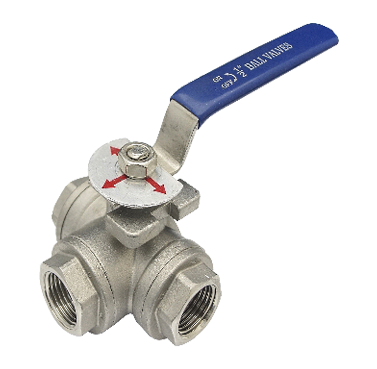
| L-port 3-way | 1/4″–2″ | Reduced | SS316 | 1,000 PSI | BSPP/NPT | Divert or shut off |
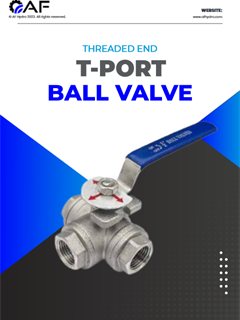
| T-port 3-way | 1/4″–2″ | Reduced | SS316 | 1,000 PSI | BSPP/NPT | Mix, split or divert |
| Brass | 1/4″–4″ | Near-full | Brass | 300 PSI | BSPP/NPT | Budget option — water/air duty |
| Brass mini | 1/4″–3/4″ | Reduced | Brass | 300 PSI | BSPP only | Compact isolation points |
| SS316 mini | 1/8″–1″ | Reduced | SS316 | 1,000 PSI | BSPP/NPT | The only 1/8″ in the range |
Full bore exists only on the 2-piece and 3-piece. The 1-piece is always reduced; the three-way and mini variants are both reduced. If flow matters, your choice has already narrowed to two variants.
| Size | Pipe bore | 1-piece bore | 2-piece bore | Area ratio |
|---|---|---|---|---|
| 1/4″ | DN8 | 5 mm | 10 mm | 25% |
| 3/8″ | DN10 | 7 mm | 12 mm | 34% |
| 1/2″ | DN15 | 9 mm | 15 mm | 36% |
| 3/4″ | DN20 | 12 mm | 20 mm | 36% |
| 1″ | DN25 | 15 mm | 25 mm | 36% |
| 1¼″ | DN32 | 20 mm | 32 mm | 39% |
| 1½″ | DN40 | 25 mm | 38 mm | 43% |
| 2″ | DN50 | 32 mm | 50 mm | 41% |
The last column surprises most people. At 1/4″, a reduced-bore valve passes only 25% of the area a full-bore one does — not 80 or 90%. Across the range, reduced bore sits at 25 to 43%. That is fine on switches and circuits where pressure drop is irrelevant; it is a serious problem in a flow line.
| Temperature | Pressure (bar) | Pressure (PSI) | Percent |
|---|---|---|---|
| −30…+20 °C | 63 bar | 914 PSI | 100% |
| 40 °C | 59.8 bar | 867 PSI | 95% |
| 60 °C | 56.5 bar | 819 PSI | 90% |
| 80 °C | 53.3 bar | 773 PSI | 85% |
| 100 °C | 50.1 bar | 727 PSI | 80% |
| 120 °C | 46.8 bar | 679 PSI | 74% |
| 140 °C | 43.6 bar | 632 PSI | 69% |
| 150 °C | 42 bar | 609 PSI | 67% |
⚠ The curve stops dead at 150 °C — that is not a point to design beyond. And note that at 150 °C the valve holds only two thirds of its cold rating. The limit is set by the PTFE seat, not the stainless body. State pressure and temperature together when ordering — either one alone is not enough.
| If… | Choose |
|---|---|
| It will never be opened | 1-piece — reduced bore, lowest leak risk |
| It may be opened | 2-piece — full bore, serviceable, most common |
| The line cannot be shut down | 3-piece — full bore, serviced in place |
| Diverting or mixing | L-port or T-port — up to 2″ only |
| Small isolation points | Mini variants — down to 1/8″ |
| Cost, water/air duty | Brass — 300 PSI, not equivalent to stainless |
L-port against T-port
| Type | What it can do | Note |
|---|---|---|
| L-port | Connects two ports at a time — diverts or shuts | Identical bodies, identical dimensions — swappable without reworking pipework |
| T-port | Can connect all three — mixes, splits or diverts |
Every valve here closes the same way — a ball turning a quarter turn onto a PTFE seat. What separates them is what that ball and body are made of, and the honest answer is that the eight variants fall into two families that are not interchangeable on anything except the flow path.
| Part | Stainless variants | Brass variants |
|---|---|---|
| Body | SS316, with CF8M where cast | Brass |
| Ball | SS316 | Chrome-plated brass |
| Stem | SS316 | Brass |
| Seat | PTFE | PTFE |
| Body seal | PTFE gasket and stem seal | NBR O-ring |
| Anti-static device | SS304 — fitted on the 1, 2 and 3-piece | Not listed |
| Handle | SS201 | Aluminium |
| Handle nut | SS304 | Steel |
| Working pressure | 1000 PSI · 2000 PSI on the 2-piece | 300 PSI |
PTFE throughout, which is why every variant here tops out at 150 °C whatever the body is made of. SS316 would take far more; the seat is what stops it. Roughly a third of the cold rating is gone by 150 °C on both.
The stainless valves seal on PTFE everywhere. The brass ones carry an NBR O-ring, which is excellent on oil, water, grease and air and wrong for steam, strong acids and aromatic hydrocarbons. That single part, not the body metal, is usually what rules brass out.
The stainless valves drop to SS304 on the gland and nuts, SS301 on the spring washer and SS201 on the handle. The brass ones use an aluminium handle on a steel nut. On a washdown or coastal installation the handle furniture corrodes first on both — the pressure boundary is fine, the thing you grab is not.
A ball turning on PTFE seats is electrically isolated from the body. The 1-piece, 2-piece and 3-piece fit an SS304 device to bond it back. The brass valves, the three-way pair and both minis do not list one — which matters on hydrocarbon duty.
It is the cast form of 316 and chemically equivalent to the wrought material. Where a part is cast rather than machined, CF8M is the correct specification — it is not a substitution.
Bare brass would gall against PTFE. The plated surface is harder and smoother, and it is what lets the valve seal repeatedly rather than once.
The SS316 mini carries the same 1000 PSI as the full-size stainless valves, but its stem and bolt are SS304, not SS316, and its lever is aluminium. Same pressure, lighter build, no anti-static device.
All eight are quarter turn and all eight run −29 to 150 °C. If you need to know exactly what touches your fluid on one particular valve, the full numbered bill of materials is on that variant's own page.
Of all debris — grit that gets through wears the PTFE seat.
Before the valve goes in, not after.
Size and end type — BSPP is not NPT.
Pipe weight must not rest on the valve.
On the threaded ends, to suit the thread form.
Once the line is fully installed and supported.
⚠ The valve is not a pipe alignment tool. Misaligned joints distort the body — and that distortion “can affect tightness, functioning, and can even result in rupture”. It is the least-admitted cause of failure on threaded valves.
Dimensions and part numbers per variant are in the catalogues, as printed; stock and price are not — send the list and we confirm both.
| Not published | What it means for you |
|---|---|
| Cv flow coefficient | For flow calculations, use the bore area table on this page as the basis and talk to us. |
| ISO 5211 actuator pad | Not published on any of the eight variants — verify the actuator fit before ordering. The PN16/PN40 wafer type (a different product) does carry F03/F04 pads. |
| API 608 / fire-safe certification | The seat is soft-seated PTFE — we make no fire-safe claim on this range. |
| Lockable handle (LOTO) | Not a published option — specify at enquiry; it is a factory question and harder to retrofit. |
| EN 10204 3.1 certificates | Available on request; the castings carry heat numbers. Specify with the order, not after delivery. |
Start with one question: will it ever be opened? Never → 1-piece. Possibly → 2-piece. Yes and the line cannot be shut down → 3-piece. Then: does flow matter? If it does you need full bore — only on the 2-piece and 3-piece.
1-piece: solid cast body, cannot be serviced. 2-piece: the most common, serviceable, but with a potential leak path at the body joint. 3-piece: the end caps stay in the pipe and the centre section lifts out — which prevents a line shutdown if maintenance is required.
Full bore: the hole matches the pipeline, no flow restriction. Reduced bore: a smaller opening, generally used in switches and circuits where pressure drop is irrelevant. See the flow area table above — the gap is much bigger than people assume.
No. The 1-piece is always reduced bore. The 2-piece and 3-piece are full bore. The three-way and mini variants are both reduced bore.
1/8″ to 4″ (DN6–DN100) across the range — but not all variants cover all sizes. The 1/8″ is only from the SS316 mini.
Brass 300 PSI. Stainless 1,000 PSI. The 2-piece is also supplied in a separate 2,000 PSI range. All are cold ratings — the temperature derate applies on top.
Only if the duty is comfortably under 300 PSI. Brass is roughly a third of the stainless rating — they are not equivalent. Water, air and non-corrosive service only.
−29 °C to 150 °C. The PTFE seat sets the limit, not the stainless body. Pressure falls as temperature rises, and the curve stops dead at 150 °C.
The L-port connects two ports at a time: diverts or shuts. The T-port can connect all three: mixes, splits or diverts. Identical bodies and dimensions — swappable without reworking pipework.
Yes — socket weld and butt weld on the 3-piece only, alongside BSPP and NPT.
Not from this page — see flange end ball valves for cast and forged steel, ANSI 150/300.
The manufacturer does not publish an ISO 5211 pad for any of the eight variants. Verify the actuator fit before ordering. The PN16/PN40 wafer type — a different product — does carry F03/F04 pads.
Six steps: clean the pipes; align the connecting pipes; check both sections match; support unsupported pipework; apply thread sealant; double-check tightness. The valve is not a pipe alignment tool — distortion affects tightness, functioning, and can even result in rupture.
Nearly. The quarter-turn design requires almost no maintenance. The PTFE seat wears from grit — clean the pipes first. The 2-piece and 3-piece are re-seateable; the 1-piece is replaced.
No Cv. No ISO 5211 pad on any of the eight. No API 608 / fire-safe certification (soft-seated PTFE). EN 10204 3.1 certificates are available on request — specify with the order.
Related: flange end ball valves · butterfly valves · gate valves · about the AF Hydro brand · all low pressure valves · baca halaman ini dalam Bahasa Indonesia
