Rising-stem isolation valves in ten variants — flanged ANSI 150 and JIS 10K, threaded NPT and BSPP, and socket weld — in cast iron, cast steel, forged steel A105 or SS316. Most of this range works to 425 °C, far above what a ball valve will take, because they seal on metal and graphite rather than PTFE. This page exists to take you to the right variant.
DN15 to DN150 across the range — the upper and lower limits differ by variant.
Most variants, graphite packed — against 150 °C for a PTFE-seated ball valve.
The highest here, and it is on the threaded and weld ends, not the flanged ones.
Cast iron · cast steel · forged A105 · SS316 — the choice is heat and corrosion.
Tell us the size, the end type and flange standard, the fluid, pressure and temperature — quotes within 2 working hours.
Each has its own page with the full bill of materials, every dimension and its test pressures.
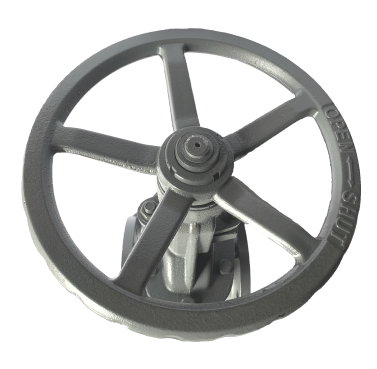
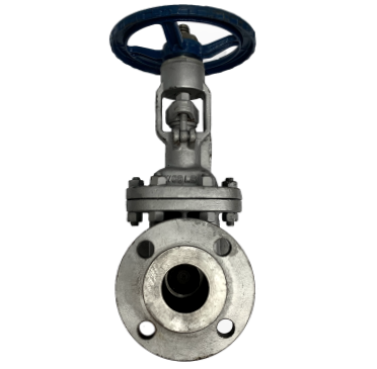
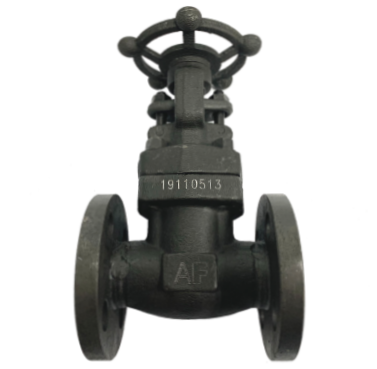
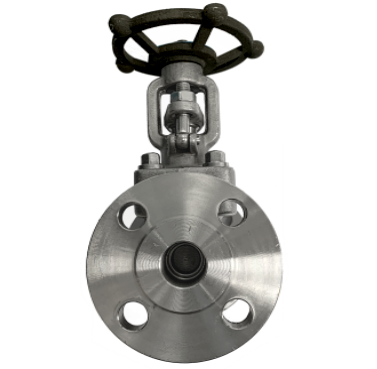
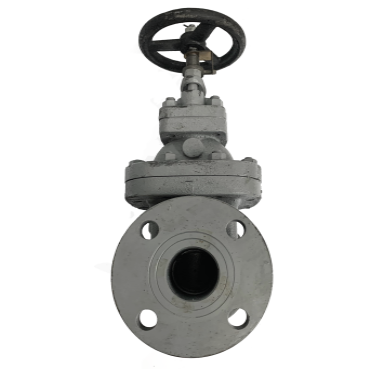
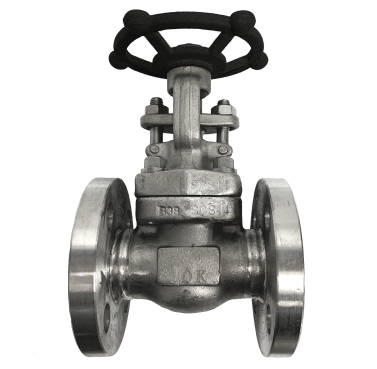
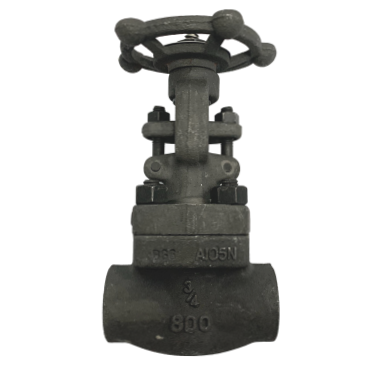
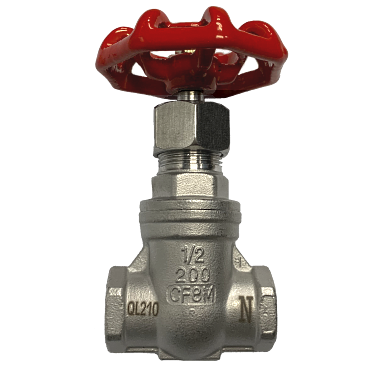
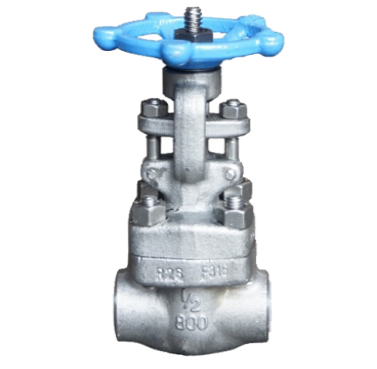
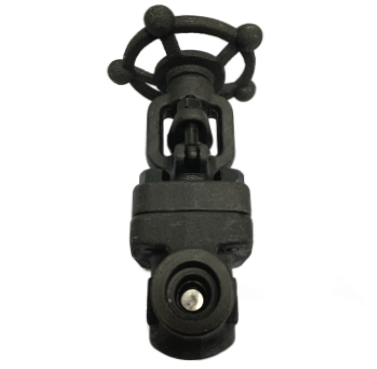
Fully open or fully shut. Never in between.
A gate valve isolates. A flat or wedge-shaped gate is driven down across the bore by a threaded stem, and when it is fully closed the gate seats against the body on both faces. Turn the handwheel the other way and the gate lifts clear of the flow path entirely, which is the gate valve's real advantage: fully open, it presents almost no restriction and almost no pressure drop — a straight, unobstructed bore.
The trade is that it takes many turns rather than a quarter turn, and that it is not a throttling valve. Held part-open, flow across the partly-raised gate vibrates it and erodes both gate and seat, and the damage is permanent.
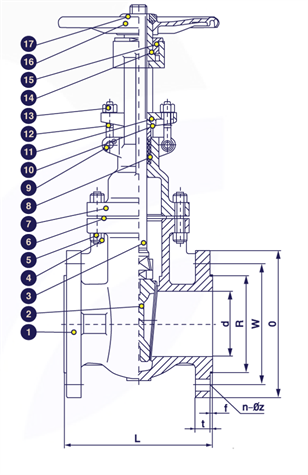
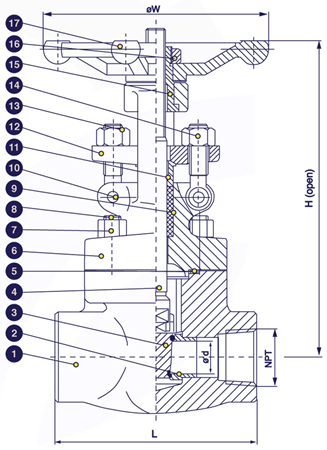
Two of the ten, side by side. Both work the same way — a threaded stem drives the wedge down across the bore — and what differs is the body and the way it joins your line. Every variant page carries its own sectional drawing, with a bill of materials whose numbers match it one for one.
It is an isolation valve. Throttling on the gate face wrecks the seat, and a wrecked seat cannot be relied on to shut off. Globe valves are built for it.
Against 150 °C for PTFE-seated ball valves. Gate valves here use graphite packing and metal seating, which is why they take steam and hot oil that a ball valve cannot.
Flanged for larger sizes and anything you expect to remove; threaded for small bore and permanent runs; socket weld where a threaded joint is not acceptable.
ANSI 150 and JIS 10K will not bolt to each other despite similar pressure ratings — different bolt circles. Check the pipework, not the pressure.
Cast iron for water and low-duty service, cast steel and forged steel A105 for pressure and heat, SS316 for corrosion.
The one standard common to all ten — which is what makes the test pressures on the variant pages comparable.
End type first, then standard, then material.
| Variant | End | Size | Material | Pressure | Max temp | Choose it when… |
|---|---|---|---|---|---|---|
| ANSI 150 cast iron | ANSI 150# flange | 2″–6″ | Cast iron A126 B | 150# | ≤ 205 °C | Water and low-duty — lowest cost |
| ANSI 150 cast steel | ANSI 150# flange | 2″–6″ | A216 WCB | 150 PSI | 425 °C | Steam and hot oil, larger sizes — API 600 |
| ANSI 150 forged steel | ANSI 150# flange | 1″–1½″ | Forged A105 | 150 PSI | 425 °C | Small-bore flanged — forged, API 602 |
| ANSI 150 SS316 | ANSI 150# flange | 1″–4″ | SS316 / CF8M | 150 PSI | 425 °C | Corrosive on ANSI — two size bands |
| JIS 10K cast iron | JIS 10K flange | 2″–6″ | Cast iron A126 B | 10K | 429 °C | Japanese pipework — will not bolt to ANSI |
| JIS 10K SS316 | JIS 10K flange | 1″–4″ | SS316 / CF8M | 10K | 425 °C | Corrosive on JIS — dimensions per order |
| Threaded forged steel | NPT | 1/2″–2″ | Forged A105 | 800 PSI | 425 °C | Small bore, high pressure — 800 PSI screwed |
| Threaded SS316, 200 PSI | BSPP or NPT | 1/2″–2″ | SS316 CF8/CF8M | 200 PSI | 150 °C | Light corrosive — the only 150 °C |
| Threaded SS316, 800 PSI | BSPP or NPT | 1/2″–2″ | F316 forged | 800 PSI | see page | Corrosive at pressure — 4× the 200 PSI |
| Weld end forged steel | Socket weld | 1/2″–2″ | Forged A105 | 800 PSI | 425 °C | A threaded joint is not acceptable |
Flanged comes out of the line without cutting; threaded is cheaper and smaller but permanent in practice; socket weld is permanent and leak-free. Six of these are flanged, three threaded, one weld end.
Both sit near 1.6–2 MPa and their bolt circles differ, so the pressure rating tells you nothing about whether the valve will fit. Check the flange on the pipework.
800 PSI against 150 PSI flanged — a small forged body takes far more pressure than a large cast one. If you need pressure at small bore, look at the bottom four rows first.
The threaded SS316 200 PSI is rated 150 °C, as published for its cast CF8/CF8M body; the 800 PSI version's working temperature is confirmed with the factory on request.
Not 425 like the others — as published. Meanwhile the ANSI 150 cast iron is rated ≤ 205 °C, far below the steel variants. For hot service, specify cast steel or forged steel and the question does not arise.
API 598 covers testing on all ten. The design standard is what differs.
| Variant | Design and manufacture | Face-to-face | Ends | Inspection |
|---|---|---|---|---|
| ANSI 150 cast iron | ASME B16.10 | ASME B16.10 | ASME B16.1 | API 598 |
| ANSI 150 cast steel | API 600 | ASME B16.10 | ASME B16.5 | API 598 |
| ANSI 150 forged steel | API 602 / BS 5352 | ASME B16.10 | ASME B16.5 RF | API 598 |
| ANSI 150 SS316 | API 602 / BS 5352 | ASME B16.10 | ASME B16.5 RF | API 598 |
| JIS 10K cast iron | ASME B16.10 | ASME B16.10 | JIS B2212 | API 598 |
| JIS 10K SS316 | API 602 / BS 5352 | ASME B16.10 | JIS B2220:2012 RF | API 598 |
| Threaded forged steel | API 602 / BS 5352 | – | ASME B1.20.1 NPT | API 598 |
| Threaded SS316, 200 PSI | ASME B16.34 | – | ANSI thread | API 598 |
| Threaded SS316, 800 PSI | API 602 | – | ASME B1.20.1 | API 598 |
| Weld end forged steel | API 602 / BS 5352 | – | ASME socket weld | API 598 |
A heavier, bolted-bonnet specification. Only the ANSI 150 cast steel is built to it, and it is the one to quote where a specification says “gate valve to API 600”.
It covers six of the ten — every forged steel and SS316 variant here. If your specification names API 602, those six are the candidates.
All ten are inspected and tested to it, which is what makes the test pressures on the variant pages directly comparable.
As the catalogue prints it. If your specification needs the governing design standard stated formally, ask us and we will get it confirmed.
JIS B2212 on the cast iron and JIS B2220 on the SS316 — both JIS 10K drillings, but specified against different documents.
Four grades, and the choice is mostly about heat and corrosion.
| Material | Body grade | Where it belongs | Watch for |
|---|---|---|---|
| Cast iron | ASTM A126 B | Water, and general low-duty service on ANSI 150 or JIS 10K pipework. The cheapest bodies in the range. | Brittle. Cast iron does not tolerate impact, bending load or thermal shock. Support it properly and do not use it where the line moves. |
| Cast steel | ASTM A216 WCB | Steam and hot oil at 2″ and above. Built to API 600. Takes 425 °C and the highest flanged test pressure here. | Carbon steel — no corrosion resistance. Not for aggressive fluids or wet, salty environments. |
| Forged steel | ASTM A105 | Small bore, high pressure. 800 PSI on the threaded and weld-end valves — more than five times the flanged rating. | Also plain carbon steel. No corrosion resistance, same as cast steel. |
| SS316 | A182 F316 forged · A351 CF8M cast | Corrosive fluids and wet or coastal environments. Available flanged on ANSI and JIS, and threaded at 200 or 800 PSI. | The 200 PSI threaded version is a cast CF8/CF8M body limited to 150 °C — the only variant here that low. |
The forged A105 valves reach 800 PSI but stop at 2″; the cast bodies go to 6″ but only to 150 PSI. That single trade-off explains most of this range.
It is a perfectly good body for water at ambient on a well-supported line, and the wrong choice anywhere there is vibration, impact risk or thermal cycling.
A182 F316 is forged and used on the smaller sizes; A351 CF8M is the cast equivalent used above 2″. Chemically equivalent, mechanically not identical — forged is the stronger.
If stainless was specified because of the fluid or the environment, A105 and A216 WCB are not substitutes whatever their pressure rating.
Which is why most of this range reaches 425 °C where the PTFE-seated ball valves stop at 150.
This is where gate valves pull away from ball valves. Eight of these ten work to 425 °C; a ball valve from the same range stops at 150 °C, because it seals on a PTFE seat and PTFE softens. A gate valve seats metal to metal and packs the stem with graphite, so the body material becomes the limit rather than a polymer.
| Variant | Nominal | Shell / body test | Seal test | Gas tightness | Max temperature |
|---|---|---|---|---|---|
| ANSI 150 cast iron | 150# | 2.06 MPa | 1.57 MPa | 0.6 MPa | ≤ 205 °C |
| ANSI 150 cast steel | 150 PSI | 3.1 MPa | 2.2 MPa | 0.6 MPa | −29 to 425 °C |
| ANSI 150 forged steel | 150 PSI | 3.0 MPa | 2.2 MPa | 0.6 MPa | −29 to 425 °C |
| ANSI 150 SS316 | 150 PSI | 3.0 MPa | 2.2 MPa | 0.6 MPa | −29 to 425 °C |
| JIS 10K cast iron | 10K | 2.06 MPa | 1.57 MPa | 0.6 MPa | 429 °C |
| JIS 10K SS316 | 10K | 3.0 MPa | 2.2 MPa | 0.6 MPa | −29 to 425 °C |
| Threaded forged steel | 800 PSI | 21.0 MPa | 15.4 MPa | 0.6 MPa | −29 to 425 °C |
| Threaded SS316, 200 PSI | 200 PSI | 2.1 MPa | 1.6 MPa | 0.6 MPa | −29 to 150 °C |
| Threaded SS316, 800 PSI | 800 PSI | 21.5 MPa | 15.5 MPa | 0.6 MPa | on request |
| Weld end forged steel | 800 PSI | 21.0 MPa | 15.4 MPa | 0.6 MPa | −29 to 425 °C |
Eight of the ten reach it, against 150 °C for a PTFE-seated ball valve. On steam, hot oil or thermal fluid the gate valve is not a preference, it is the only one of the two that will work.
That is seven times the flanged shell test, from a body a fraction of the size — forging rather than casting is what buys it.
The one figure that does not move with class, size or material.
The ANSI 150 cast iron is rated ≤ 205 °C; the JIS 10K cast iron states 429 °C; and the threaded SS316 800 PSI prints “200” without a unit, which we confirm with the factory on request.
The shell test proves the body, the seal test proves the gate against its seat. Do not design to them.
“Hydraulic body test” and “hermetical seal test” rather than “shell” and “gas-tightness”. Different catalogue sources, same three tests.
The range as a whole. Per-variant figures are on the ten pages.
| Item | Detail |
|---|---|
| Size range | 1/2″ to 6″ (DN15–DN150) — threaded and weld end stop at 2″, flanged runs from 1″ to 6″ |
| End types | ANSI 150# flange · JIS 10K flange · NPT · BSPP · socket weld |
| Body materials | Cast iron A126 B · cast steel A216 WCB · forged steel A105 · SS316 (A182 F316 forged, A351 CF8M cast) |
| Working pressure | 150 PSI / 150# / 10K flanged · 200 PSI or 800 PSI threaded · 800 PSI weld end |
| Working temperature | To 425 °C on eight of ten — the exceptions are in the temperature table above |
| Design standards | API 600 (cast steel) · API 602 / BS 5352 (forged and SS316) · ASME B16.34 · ASME B16.10 |
| Inspection and test | API 598 — all ten variants |
| Stem | Rising stem, handwheel operated. Multi-turn, not quarter turn |
| Packing | Graphite — which is what allows 425 °C |
| Duty | Isolation only. Fully open or fully shut — never throttle a gate valve. For throttling use globe valves |
| Not on this page | Ball valves for quarter-turn isolation · globe valves for throttling · butterfly valves for large-bore isolation |
| Stock | Singapore & Malaysia warehouses — out within 24 hours |
ANSI 150 and JIS 10K sit at similar pressure ratings and will not bolt to each other. Match the drilling on your pipework.
Rising stem means the stem travels up out of the bonnet as the valve opens. The headroom needed is greater than the closed height — check before fitting under a platform.
A valve must not hang on the pipework, and must never be used to pull a misaligned flange together. This matters more again on cast iron, which is brittle.
Then back off a quarter turn from fully open — the old practice that stops the stem seizing on the backseat after thermal expansion.
Not even “temporarily”. Erosion on the gate face is permanent, and a wrecked seat will pass flow when you most need it to shut.
Graphite packing beds in. A small re-tighten of the gland once the line reaches working temperature is normal, not a sign of failure.
Ten manufacturer catalogues, one per variant. All AF Hydro PDFs, as printed.
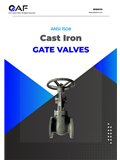
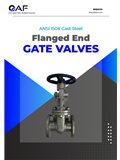
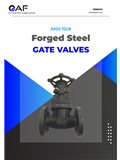
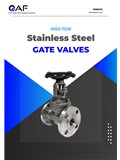
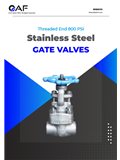
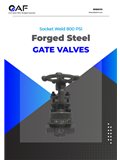
Dimensions and part numbers per variant are in the catalogues, as printed; stock and price are not — send us the list and we will confirm both.
The catalogues are thorough on dimensions and test pressures, and silent on a few things people ask about regularly. We say which — we do not guess, and we do not borrow figures from another variant.
| Not published | What it means for you |
|---|---|
| Working temperature on two variants | ANSI 150 cast iron prints no temperature at all, and threaded SS316 800 PSI prints “200” with no unit. We do not guess the unit — we ask the factory. For hot service specify cast or forged steel and the question does not arise. |
| Flow coefficient Cv | Not published on any variant. A gate valve fully open presents almost no restriction, so the full bore is adequate for most calculations — come to us if the figure is critical. |
| Operating torque and number of turns | Not published. These are multi-turn, not quarter turn — if the valve is to be actuated, or operated often by hand, ask before ordering. |
| ISO 5211 actuator pad | Not published across this range. These gate valves are handwheel operated — settle the actuation arrangement with us rather than assuming a top plate. |
| Fire-safe certification | Not claimed. What we can state: metal-to-metal seating and graphite packing, which is the reason this range reaches 425 °C — but that is not a fire-safe certificate. If your specification demands one, say so before ordering. |
| Design standard on the cast iron variants | The catalogue cites ASME B16.10, which is a face-to-face standard rather than a design standard. We publish it as printed. If your specification needs the governing design standard stated formally, ask and we will confirm with the factory. |
| EN 10204 3.1 certificates | Available on request; the castings carry heat numbers. Ask with the order, not after the goods arrive. |
⚠ One published detail that is easy to miss: the two cast iron variants use different test terminology from the other eight — “hydraulic body test” and “hermetical seal test” instead of “shell” and “gas-tightness”. Different catalogue sources, the same three tests. We leave it as printed.
Isolation — fully open or fully shut, never in between. A gate is driven down across the bore by a threaded stem; fully open, the gate lifts clear of the flow path entirely, so the valve presents almost no restriction and almost no pressure drop. That is its real advantage over almost every other valve type.
Because it is not a throttling valve. Held part-open, flow across the partly-raised gate vibrates it and erodes both gate and seat — and the damage is permanent. A wrecked seat cannot be relied on to shut off when you actually need it. If you need to regulate flow use a globe valve; if you need fast on-off use a ball valve.
Ten. Six flanged — ANSI 150 in cast iron, cast steel, forged steel and SS316, plus JIS 10K in cast iron and SS316 — three threaded, and one socket weld. The range runs 1/2″ to 6″.
Because it seals on metal and graphite rather than PTFE. Eight of the ten variants here are rated 425 °C; a ball valve from the same range stops at 150 °C because its PTFE seat softens. On steam, hot oil or thermal fluid the gate valve is not a preference — it is the only one of the two that will work.
The end type is the first decision and it cannot be changed later. Flanged comes out of the line without cutting; threaded is cheaper and smaller but permanent in practice; socket weld is permanent and leak-free. What may surprise you: the threaded and weld-end valves are the high-pressure ones — 800 PSI against 150 PSI flanged, because a small forged body takes far more pressure than a large cast one.
No. Both sit near 1.6 to 2 MPa and their bolt circles differ, so the pressure rating tells you nothing about whether the valve will fit. Check the flange on the pipework, not the pressure.
Four. Cast iron A126 B for water and low-duty service — the cheapest, but brittle. Cast steel A216 WCB for pressure and heat at larger sizes. Forged steel A105 for pressure at small bore. SS316 for corrosion, in two grades: A182 F316 forged below 2″, A351 CF8M cast above. Worth remembering: neither carbon-steel grade resists corrosion.
API 598 covers testing on all ten — that is the common thread, and it is what makes the test pressures comparable. The design standard differs: API 600 on the cast steel only, API 602 / BS 5352 on the six forged and SS316 variants, and ASME B16.10 cited on both cast iron variants, as the catalogue prints it.
Three. ANSI 150 cast iron is rated ≤ 205 °C — far below the 425 °C of the steel variants — and threaded SS316 800 PSI prints “200” with no unit — we do not guess, we ask the factory. Note also that JIS 10K cast iron states 429 °C rather than the 425 of the others. We publish it as printed.
We hold it in our Singapore and Malaysia warehouses, out of the warehouse within 24 hours of PO. Quotes within 2 working hours. Send the size, end type and flange standard, fluid, pressure and temperature — those five settle the variant.
Related: globe valves · low pressure ball valves · butterfly valves · swing check valves · all low pressure valves · our videos on YouTube.
Baca halaman ini dalam Bahasa Indonesia
